
USPS issued the Powwows stamps on April 25, 2025, in a pane of 20 with four designs. Cochiti Pueblo artist Mateo Romero created paintings of Crow Hop, Women’s Traditional, Women’s Fancy Shawl and Men’s Hoop dancers; Antonio Alcalá designed the stamps. Meanings and protocols vary among Native nations and individual powwows, so this page uses the named artworks and attributed sources rather than assigning one universal spiritual meaning.
What is a powwow? What stories do these stamps tell?
Powwows can include dance, music, food and community gathering; this issue presents four specific dance subjects through one artist’s paintings.
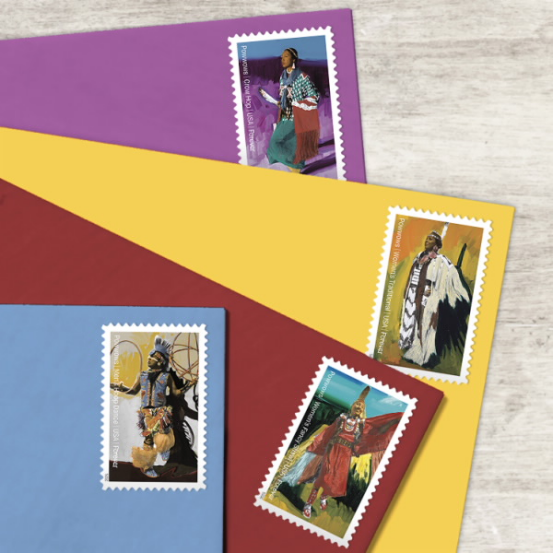
The USPS Powwows stamps reproduce four paintings by Cochiti Pueblo artist Mateo Romero. He began with photographs of dancers performing the Crow Hop, Women’s Traditional, Women’s Fancy Shawl and Men’s Hoop dances, then used vivid color, heavy brushwork and painted marks to suggest movement. In his first-person account of the project, Romero also says that Native curators with relevant expertise advised on the dancers and dances. That consultation is more specific than calling the small postal images a complete record of any nation’s traditions.
Identify the four dancers in the pane
USPS’s dedication account describes the visible figures below. Romero photographed dancers in regalia while they performed and developed paintings from those images; Antonio Alcalá designed the finished pane.
| Dance named on stamp | Visible details in USPS image description |
|---|---|
| Crow Hop | A young woman in a teal dress with a red cloth over her arm, against a blue and purple field |
| Women’s Traditional | A dancer in brown, ecru and white regalia, against orange, yellow and green |
| Women’s Fancy Shawl | A fringed, wing-like cape with a scarlet main area and yellow, blue and orange fringe, against turquoise, azure and gold |
| Men’s Hoop | A dancer holds several hoops with one foot raised; USPS describes a blue vest and headdress, multicolored breechcloth and blue moccasins |
The vertical wording on each stamp names the dance alongside “POWWOWS,” “USA” and “FOREVER.” The official first-day ceremony took place at the Gathering of Nations Pow Wow in Albuquerque, New Mexico. In the USPS release, Romero described the commission as an honor and spoke about bringing painting and powwow culture onto postage; attributing that view to the named artist is more precise than speaking for all Indigenous communities.
What the artworks show—and what they cannot establish
These are contemporary portraits of dancers, not generic historical illustrations. Romero’s combination of photographic source material and paint makes the people and their movement central to each stamp. In an interview about the models, he identifies Tony, Violet and Manaya Duncan and KamiJo Whiteclay among the people involved, while emphasizing that the dancers’ own stories matter.
The reporting names several models but does not map every person to a specific design, so this article does not assign identities without evidence. The named dancers’ and communities’ accounts can add context that the small images cannot supply.
How the issue was presented to the public
USPS dedicated the stamps on April 25, 2025, at the Gathering of Nations Pow Wow in Albuquerque. Its dedication account records Romero’s view of the commission and names other ceremony participants, including the Native American Women Warriors Honor Guard and musician Kansas Begaye. This is evidence about that launch, not evidence that USPS routinely launches comparable issues at powwows.
Why are these USPS stamps worth collecting?
The pane provides a dated record of four artworks made for a 2025 postal issue. A collector can preserve the printed names, colors, pane layout and artist credit.
The issue can fit collections organized around contemporary art, dance, Indigenous subjects or 2025 U.S. stamps. Any monetary appraisal requires the exact format, condition and dated completed sales rather than an assumption that cultural importance predicts price.
In this documented issue, one Indigenous artist’s original paintings appear on nationally circulating postage. That fact is meaningful without claiming a trend across “many” stamp projects or judging what is authentic for other Native artists and communities.
Where to learn beyond the pane
Romero says he hoped the images would show Native people as living and flourishing, while also acknowledging limits to his own knowledge of Plains powwow communities; he sought advice from Native curators. Those are his stated aims and working choices, not measured effects on younger viewers or proof of one shared meaning across nations.
The artist interview explains how Romero combined photographs and painting and why he consulted Native curators; dancer and community accounts can add perspectives beyond the pane.
Conclusion: A small stamp carries great significance
The original USPS unit is a 20-stamp pane containing the four artworks; a seller’s 100-count offering would combine five panes, not create a new issue. For a collector or sender, the named dance and artist credit provide a more reliable starting point than an unsupported generalization about Native culture or future market value.
Sources and update note
USPS’s dedication release documents the four images and first-day ceremony; its Postal Bulletin records the original pane. Romero’s first-person interview explains his choices and consultation, while the separate reporting identifies several models. Prices and availability should be checked at the time of use.