
In many people’s minds, the United States Postal Service (USPS) is just that old, slow-moving messenger that delivers bills and mails postcards. But if you flip through their annual reports and look at their recent reform plans, you’ll find that this century-old institution is quietly undergoing a transformation, and its future over the next decade may completely change your imagination.
Verified facts for this topic
Delivering for America began in 2021 as a ten-year transformation plan with $40 billion in planned investment across delivery, processing, retail, IT, sorting and vehicles. Later updates are plan evolution, not proof that every target is complete.
USPS reports 348 new package-sorting machines deployed and daily package-processing capacity increased to 70 million pieces; these are network figures, not a throughput promise for one machine or shipment.
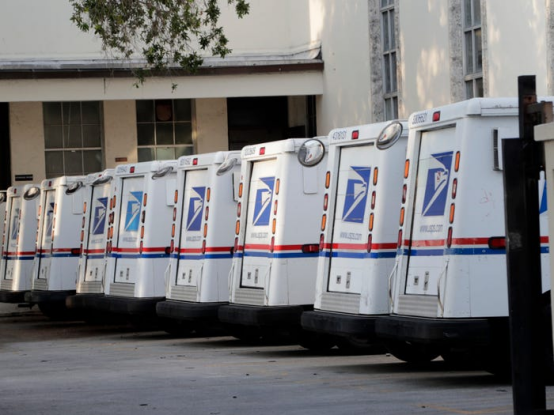
USPS awarded the NGDV contract to Oshkosh Defense in 2021. A 2022 plan anticipated 106,000 delivery vehicles through 2028, including at least 66,000 battery-electric vehicles; plan totals are not completed-delivery totals.
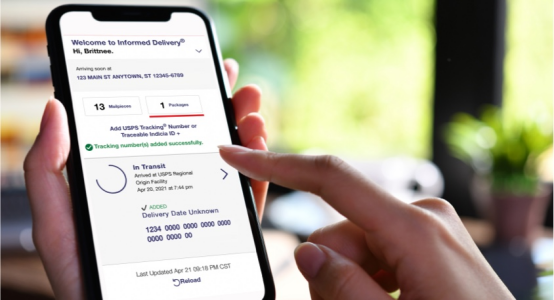
USPS Mobile officially lists tracking, locations, pickup scheduling, price calculation, ZIP Code lookup, Hold Mail, Ship Online, Buy Stamps, Informed Delivery and Change of Address; some purchase functions require a USPS.com account.
1. The “Ice Age” of Mail, the “Golden Boom” of Packages
A postman friend once told me, “Delivering an envelope these days is like sending a love letter—it’s incredibly rare.”
And it’s true—since 2000, letter mail has been declining year by year, like a receding tide. But what about the parcel business? E-commerce orders, in particular, skyrocketed in 2020, the year of the pandemic.
According to the USPS Annual Report, parcel delivery will account for over 70% of its revenue by 2035. In a sense, the USPS is transforming from a “mail factory” into a “logistics giant.”
2. Digitalization: Postal services are also starting to use cloud-based mail delivery
Don’t think the postal service is limited to paper mail. Their Informed Delivery service now reaches over 80% of households in the US, allowing you to “sneak a peek” at the cover of your mail on your phone before it arrives.
During the pandemic, Emily in New York used postal mail for the first time. She said, “I didn’t even go to the post office. I sent, paid, and tracked it, just like ordering takeout.”
Even more interesting, they’re researching a “Postal Digital Identity” service, which could one day become the authentication gateway for e-government. Imagine being able to file taxes and apply for a passport using your Postal Mail account—the old post office has transformed into your online ID manager.
3. Greening: Renewing the energy of 200,000 mail trucks
The USPS currently has the world’s largest civilian fleet—over 200,000 vehicles. Its small, white, square vehicles with red and blue stripes can be seen on nearly every street.
The plan is to convert all of them to electric vehicles by 2035.
Mike, a California mail truck driver, said he’s tried an electric prototype and found it “so quiet you can hear the birds chirping,” but he’s concerned about its range in winter.
Electrification is not only environmentally friendly but also potentially reduces exhaust emissions for mail carriers. However, the investment alone will cost $11 billion. There’s a lot of catching up to do.
4. The post office becomes a multifunctional community hub
In remote towns, post offices are among the few public spaces still lit.
A post office in Montana now opens its meeting room every Wednesday, where elderly residents can use the free Wi-Fi to video chat with their grandchildren.
In the future, it might offer:
Postal banking helps people without bank accounts to deposit and withdraw money safely.
Public Wi-Fi and digital service centers, especially in network blind spots.
Emergency disaster supplies distribution points come in handy immediately when hurricanes, floods, or wildfires strike.
In this way, the post office is not only a logistics transit station but also a safe haven for information and resources.
5. The “New Channel” of Cross-border E-commerce
The rise of global e-commerce has led to a surge in cross-border small package shipments.
Last Christmas Eve, a batch of packages bound for Los Angeles and Sydney was loaded onto a plane two weeks in advance. Thanks to a real-time data sharing system between the USPS and Australia Post, their entire journey was tracked. Recipient Mary remarked that for the first time, she could see every step of her Christmas gift’s journey across the Pacific.
In the future, the USPS will establish similar data bridges in more countries, extending the reach of American e-commerce to even more markets.
Summary: New Label for Postal Service
Over the next decade, the USPS will likely be implementing these new labels:
Logistics giants (depending on packages)
Green Transportation Pioneer (Electric Fleet)
Community service hub (bank, internet, emergency center)
The postman you remember wearing a baseball cap and holding a letter is now changing into new equipment and learning new skills—when you see him again, he may have become an all-round futuristic player.
Sources and update note
Use the linked primary record for the exact issue, rule or current condition. Prices, availability and platform features can change and should be checked at the time of use.