
USPS stamps depicting notable Americans come from several distinct definitive and commemorative programs. “American celebrities” is an editorial topic used on this page, not the name of one official USPS series.
The examples are representative selections for identifying portraits, denominations and formal USPS series, not a measured ranking of popularity, scarcity or value. The two groups below are organized under their actual series names; a market comparison would require dated completed sales for a precisely identified variety and condition.
The Smithsonian National Postal Museum’s Prominent Americans guide documents the definitive subjects and varieties. USPS uses “Legends of Hollywood” for the film series. These two formal labels should not be collapsed into “American Celebrities.”
Two formal USPS programs, one editorial topic
Prominent Americans is a definitive series with multiple denominations and print formats; Legends of Hollywood consists of separate commemorative film-performer issues. Great Americans, Black Heritage, Literary Arts and Distinguished Americans are other distinct programs, not subseries of an official “American Celebrities” set. The comparison below uses portraits of political figures, reformers, writers and performers to show differences in source image, design credit, printing and postal purpose—not to rank fame or imply one common market.
Prominent Americans: seven portraits to identify
The following are representative figure stamps selected for discussion. Without a defined sales, survey or transaction-volume dataset, the selection should not be read as an objective popularity ranking.
| Prominent Americans subject | First issue shown here | Recognition clue |
|---|---|---|
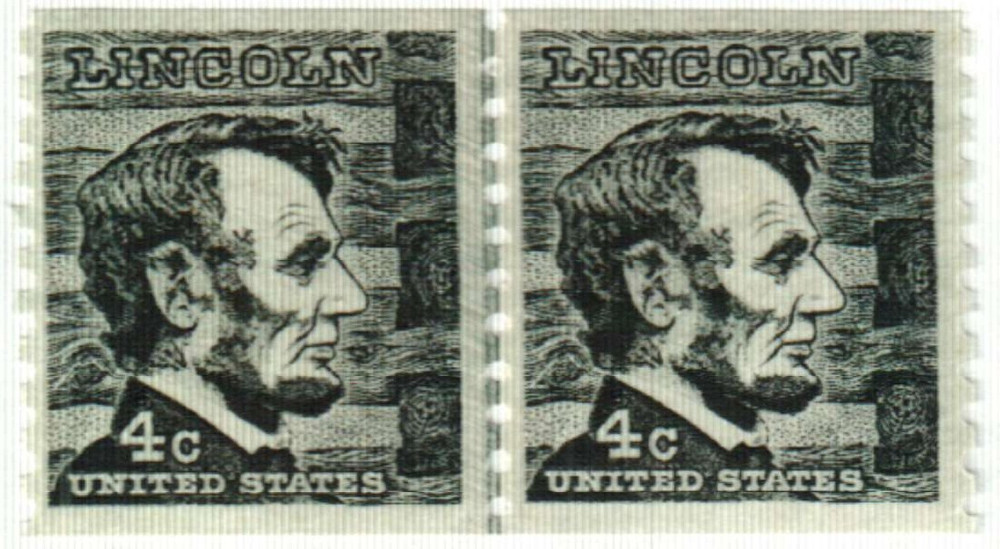
| Abraham Lincoln | 1965; 4¢ | Black profile with a log-cabin background; sheet issue, later coil format |
| George Washington | 1966; 5¢ | Blue portrait based on Rembrandt Peale; distinguish the 1967 re-engraved face |
| Andrew Jackson | 1967; 10¢ | Lilac portrait of the seventh president |
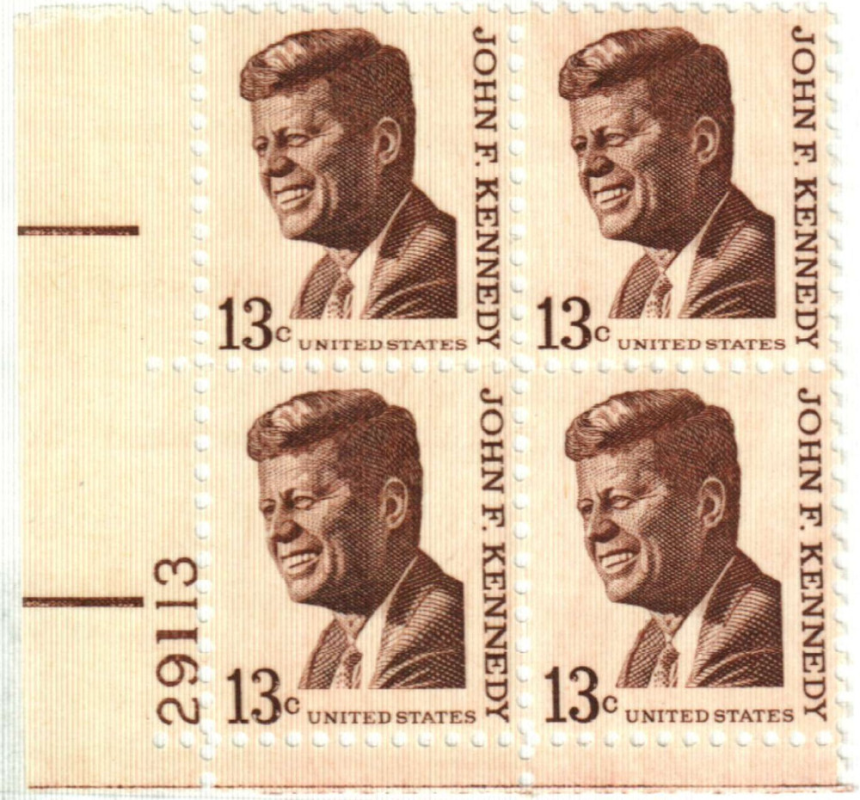
| John F. Kennedy | 1967; 13¢ | Brown portrait issued in Brookline, Massachusetts |
| Elizabeth Blackwell | 1974; 18¢ | Violet portrait of the physician |
| Lucy Stone | 1968; 50¢ | Rose-magenta portrait of the women’s-rights advocate |
| Eugene O’Neill | 1967; $1 | Dull-purple portrait of the playwright; sheet and later coil |
Years, denominations, colors and issue/format distinctions above follow the National Postal Museum’s Prominent Americans record. The year identifies the cited original issue; later formats or re-engravings can have different dates.
1. Abraham Lincoln—4¢ Prominent Americans Series
The 4¢ Lincoln belongs to the Prominent Americans series and was released November 19, 1965, as the National Postal Museum’s Lincoln issue account records. The black profile and log-cabin background distinguish its design; sheet and later coil formats should be identified separately. Market stability and demand cannot be inferred from the subject alone; compare the exact variety, condition and dated completed sales.
For a beginner, its portrait, log cabin and sheet-versus-coil distinction make a practical identification exercise; record centering, gum, perforations and faults for any actual copy.
2. George Washington—5¢ (also known as the “Dirty Face” version)
Highlights:
The original 1966 blue 5¢ sheet stamp was engraved from a portrait by Rembrandt Peale. Criticism of its pockmarked or unshaven-looking face led to a re-engraved sheet version issued November 17, 1967. The National Postal Museum describes both and also notes later coil formats; compare the image and format before applying the informal “Dirty Face” label.
3. Andrew Jackson—10¢
The 10¢ lilac Andrew Jackson stamp was issued in Hermitage, Tennessee, on March 17, 1967, the 200th anniversary of his birth, according to the National Postal Museum’s Prominent Americans record. The denomination, lilac color and dated issue distinguish it from other Jackson portraits; the subject’s historical controversy does not supply a measurable popularity ranking. Identify the exact format and condition before comparing examples.
4. John F. Kennedy—13¢
The 13¢ brown John F. Kennedy stamp was issued in Brookline, Massachusetts, on May 29, 1967. The National Postal Museum identifies it as a sheet stamp designed by Stevan Dohanos after a Jacques Loew photograph; the original panes contained 100 stamps. Those issue and format details distinguish it from other Kennedy stamps and make it a defined subject for a political-history collection. A claim of sustained market popularity would still require dated comparable sales.
5. Elizabeth Blackwell—18¢
The violet 18¢ Elizabeth Blackwell stamp honors the physician and belongs to the Prominent Americans issue, not Great Americans. The National Postal Museum records its January 20, 1974 issue in Geneva, New York, as a sheet stamp sold in panes of 100. Robert Geissmann designed the issue; those color, format and credit details distinguish it from generic Blackwell-themed listings. Collectors should still identify condition rather than infer rarity or market value from the subject alone.
6. Lucy Stone—50¢
The 50¢ rose-magenta Lucy Stone stamp was issued August 13, 1968, in Dorchester, Massachusetts. The National Postal Museum identifies it as a sheet stamp sold in panes of 100, with a Mark English design based on a photograph in a biography by Stone’s daughter, Alice Stone Blackwell. Those observable design and format details are more useful for identification than the denomination alone.
Stone’s subject can anchor a women’s-history collection, while the 50-cent denomination alone says nothing about the scarcity of a specific printing or condition.
7. Eugene O’Neill—$1
The dull-purple $1 Eugene O’Neill stamp was issued October 16, 1967, in New London, Connecticut, with a later horizontal coil issued January 12, 1973, in New Hempstead, New York, according to the National Postal Museum. Norman Todhunter based its portrait on a photograph published in The New York Times. Identify sheet versus coil and record condition before making a collector-value comparison; no claim about criminal use or unusual investment value follows from this issue record.
Legends of Hollywood: three representative stamps
Legends of Hollywood is a distinct USPS series focused on motion-picture performers. The examples below are three recognizable issues, not a measured ranking of popularity or market demand.
| Legends of Hollywood issue | Release and denomination | Recognition clue |
|---|---|---|
| Marilyn Monroe | June 1, 1995; 32¢ | Michael Deas portrait; first stamp in the series |
| James Dean | June 24, 1996; 32¢ | Michael Deas portrait based on a 1954 Roy Schatt photograph; second issue |
| Audrey Hepburn | June 11, 2003; 37¢ | Michael Deas design; ninth issue in the series |
Marilyn Monroe began the series in 1995; James Dean’s portrait draws on Roy Schatt’s 1954 photograph; Audrey Hepburn was the ninth issue. These facts help identify the stamps but do not measure current demand. Use the linked official records and the same-condition completed sales before attaching a market claim.
How to assess a specific collectible stamp
Age, a famous subject or a high printed denomination does not establish a premium. Identify the precise issue and any documented variety first; then record format, centering, gum or backing, creases, stains, cancellation and provenance. Compare completed sales with the same variety and condition, noting sale dates and buyer fees. A specialist catalog can help identify a stamp, but a catalog figure or current asking price is not a universal market formula. Claims of rarity require evidence for that specific printing or error and, when consequential, independent expertizing.
Start a focused collection
Choose a theme—presidents, women pioneers, Hollywood performers or one formal USPS series—and record the official issue, format and condition of each stamp. The identification table and linked primary records above are the starting points; a catalog identifies varieties, but a physical copy’s authenticity may require independent expertizing. Preserve stamps in appropriate archival materials, then use comparable completed sales rather than asking prices for any market assessment.
Scope: Prominent Americans and Legends of Hollywood are separate formal programs. The seven detailed portraits above retain their issue dates, artwork credits and known format differences; “notable Americans” is an editorial collecting theme, not a USPS series or a popularity ranking.
Issue-identification sources
- National Postal Museum: Prominent Americans portraits, values and variants
- National Postal Museum: Marilyn Monroe stamp
- National Postal Museum: James Dean stamp
- USPS Postal Bulletin: Audrey Hepburn issue
- USPS Legends of Hollywood series reference
These records support issue identification, not a popularity ranking or current market appraisal.