
Sometimes, a small USPS stamp can better record an era than a thick literary history book. Especially the famous “Famous Americans” series from 1940—the first time the United States used official stamps to condense literary tradition, cultural memory, and national narrative into a small space.
The 1940 Poets group as a postal record
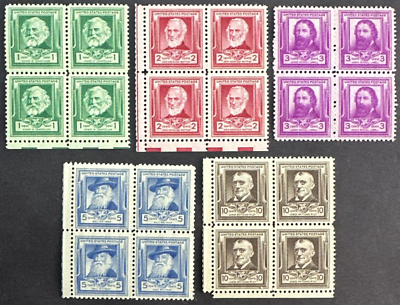
Present the five verified Poets stamps with their denominations, issue dates and coordinated format from the Smithsonian record. Speculation about why Poe, Lanier or Dickinson was omitted is not an issue fact and should be excluded unless supported by selection records.
Verified facts for this topic
The 1940 Famous Americans series contains 35 stamps: five subjects in each of seven groups—Authors, Poets, Educators, Scientists, Composers, Artists and Inventors. The Smithsonian records the subjects, denominations and issue dates.
If you unfold those five poet stamps, you’ll discover a wonderful experience: it’s like looking at a folded microcosm of American poetry history, bearing a strong imprint of its time, and also carrying the intention of the planners to “tell future generations what America is.”
1. The Birth of the Poets Series: A Symbol of a Cultural Transition
In 1940, the U. S. Postal Service launched a large commemorative series spanning seven categories, among which the “Poets” category is particularly noteworthy. The five recipients are
Henry Wadsworth Longfellow (1 cent)
John Greenleaf Whittier (2 cents)
James Russell Lowell (3 cents)
Walt Whitman (5 cents)
James Whitcomb Riley (10 cents)
This was at a tense juncture, nearing the end of the Great Depression and with war looming. The nation needed a common language, and poetry was a medium that could perfectly balance “cultural sophistication” and “educational accessibility”—not to mention, stamps themselves are one of the most powerful visual symbols of a nation’s image.
To put it bluntly: this set of USPS stamps is not a purely artistic choice, but a national-level “cultural cataloging” project.choice but
The filtering logic is roughly as follows:
It needs to be widely known by the public.
Literary figures should be healthy and positive.
It should best reflect “American values” (democracy, optimism, national spirit).optimism, and
The education system has already incorporated them into the classics
In other words, this group of people was the kind of people the US government in 1940 was willing to “tell the whole of America: This is our poet.”
2. The Status and Representative Significance of the Five Poets
2.1 Henry Wadsworth Longfellow | 1 cent green
Longfellow was a “national poet” in the eyes of the masses. In the 19th century, his fame even surpassed that of Whitman and Poe.
Representative works include:
Song of Hiawatha
Paul Revere’s Galloping Horse
Easy to read, rhythmic, and structurally sound—he was the perfect choice for textbooks at the time. His image on the 1-cent denomination (the most common) formally confirmed his central position in American culture.
2.2 John Greenleaf Whittier | 2 cents, deep red
Whittier’s identity is clear: an abolitionist poet. His poetry emphasizes morality and civic courage, and he is hailed as “the voice of justice.”
The works include:
Barbara Fritsch
Numerous anti-slavery poems
Two cents was the common face value of ordinary letters at the time, symbolizing the close connection between his work and ordinary Americans.
2.3 James Russell Lowell | 3 cents, purple
poet but Lowell was not only a poet, but also a multifaceted figure with connections to capital, including a cultural commentator, diplomat, and magazine editor.
His works and influence spanned literature, politics, and journalism, thus placing him in a “cultural authority” role in this set of stamps. The 3-cent denomination perfectly conveys this quality.
2.4 Walt Whitman | 5 cents, blue
Today, Whitman stands as the most firmly established giant. *Leaves of Grass* not only marked a turning point in American poetry but also laid the foundation for diverse values in later generations.
However, in 1940, he was still considered somewhat “avant-garde,” not truly mainstream.
Therefore, the Postal Service gave him:
Higher face value
Lower issuance volume
This is somewhat like acknowledging its literary value while still maintaining a cautious distance.
2.5 James Whitcomb Riley | 10 cents, brown
Riley represents the spirit of the common people, writing about the countryside, children, and simple life. His works are easy to understand and very suitable for widespread dissemination.
Representative works include:
Anne Frank, the little orphan
He was the most “common” of the five, but he was extremely popular at the time, so he was placed at the high position of 10 cents.
3. Why weren’t Poe, Lanier, and Dickinson selected?
The absence of giants in American literary history seems surprising at first glance. However, it makes perfect sense according to the cultural logic of the time.
Why was Edgar Allan Poe not selected?
The work is dark in theme and contains elements of death and the bizarre.
His life was shrouded in controversy.
It does not conform to the “positive and progressive” national image.
Its true literary status was only established after World War II.
Reason for Sidney Lanier’s absence
Too regionally focused (leaning towards the southern United States)
Not high public recognition
National cultural strategy prioritizes a unified national image
Most notably absent: Emily Dickinson
He published almost nothing during his lifetime.
Literary evaluations in 1940 are far less valuable than their commemorative value in later centuries.
The cultural system at that time was basically male-dominated.
These omissions themselves are evidence of cultural bias.
4. The National Cultural Logic Behind Stamps
4.1 Constructing the Narrative of a “United America”
The common label of the five poets is
Morally positive
Consistent value system
Continuously reinforced by school textbooks
They can gain relatively stable recognition across all social strata.
This was extremely important for the pre-war United States in “building cultural consensus.”
4.2 Strong Intervention in the Education System
stamps.”The teaching of American literature in the first half of the 20th century was largely determined by a few anthologies.
Curtis Hidden Page’s Chief American Poets can almost be called the “original blueprint for the list of stamps”.
Stamps are essentially an extension of school textbooks.
4.3 The Creation of Exemplary Cultural Authority
Who gets featured on a stamp symbolizes national recognition of who represents American culture.
Who doesn’t, in fact, reveals more about how an era wants to be remembered.
5. The cultural heritage of this set of stamps (and its significance to collectors).
Although the Poet Series is not expensive to collectors today (around 15-20 RMB per set), its symbolic meaning remains vibrant.
5.1 A Gateway to Literature
For many Americans, their first glimpse of a writer’s face was through a small USPS stamp
5.2 The Transition of Cultural Values Over Time
The popularity of Longfellow, Riley, and others has dropped significantly.
Poe and Dickinson were reclassified as classics.
The stamps reflect the value of 1940, not its eternal value.
5.3 Significance for Collection
Despite not being rare, the “OG Cultural Classics” set remains attractive to collectors. Many philatelists consider the complete set a model for studying American cultural policy and also regard it as part of the famous “USPS commemorative stamps” series.
Frequently Asked Questions (FAQ)
Q1: Which five poets are featured in this set of stamps?
Longfellow, Whittier, Lowell, Whitman, and Riley.
Q2: Why isn’t Po included?
Because the theme is dark and highly controversial, which doesn’t align with the rainbow-themed national propaganda direction.
Q3: How much is it worth now?
Usually RMB 15.59–19.48, depending on condition.
Q4: Which one has the highest face value?
Riley’s 10-cent stamp.
Q5: What cultural policy does this set of USPS stamps reflect?
It emphasizes cultural values such as national unity, positive morality, and educational orientation.
Conclusion
The 1940 Poets Series is more than just a few commemorative stamps; it represents an era’s imagined “American literary paradigm.”
When we re-examine them today, we realize that classics are not eternal but are constantly reshaped by the times, politics, education, and cultural power.
Perhaps this is the charm of collecting
USPS stamps: they record not only history but also how history is chosen.
Want to explore more USPS stamps and classic collections?
Browse more stamp collecting and related products
Sources and update note
Use the linked primary record for the exact issue, rule or current condition. Prices, availability and platform features can change and should be checked at the time of use.