
On September 5, 1969, Josh White’s death seemed to mark the end of a remarkable musical journey. However, history never ends with death. For this revered folk pioneer, death was simply another beginning. Thirty years later, the United States Postal Service (USPS) issued a commemorative stamp in his honor, forever cementing his image and music in the nation’s memory.
Verified facts for this topic
Official USPS records verify these issue points: Jan Matzeliger (September 15, 1991), Ethel Waters (September 1, 1994), Count Basie (September 11, 1996), Josh White (June 26, 1998), Roy Wilkins (2001), Barbara Jordan (September 16, 2011) and Allen Toussaint (January 30, 2025).
This article traces Josh White’s journey from his death in 1969 to his commemoration on a stamp in 1998, exploring how his music and social contributions transitioned between oblivion, rediscovery, and revaluation, ultimately earning both official and public recognition. Josh White’s story is more than just the trajectory of an artist’s life; it’s a timeless chapter on music, social justice, and cultural heritage.
1969: The Departure of Folk Pioneers and Historical Context
The final years
Josh White’s musical career straddled folk, blues, and pop. He remained active in the late 1960s, particularly touring the UK, where he attracted a large, young audience. However, his health declined, and a long-standing heart ailment forced him to withdraw from the public eye. He died in 1969 at the age of 55 at his home in South Carolina.
Initial reactions to his death
At the time, American society was in the waning days of the Civil Rights Movement, and the cultural climate was turbulent and complex. Although Josh White had gained national acclaim in the 1940s and 1950s for his distinctive voice and stage presence, by the time of his death, he had been largely forgotten. Some commentators even dismissed him as a “star of the past,” failing to fully recognize his profound contributions to the Civil Rights Movement and the folk music tradition.
Rediscovery of history
However, with the rise of the folk revival of the 1970s and 1980s, scholars and a new generation of musicians re-examined Josh White’s work. He was not only a brilliant performer but also a vocal social actor. Many young people rediscovered him through vinyl records and archival materials, gradually realizing that his work is an indispensable part of American musical history.
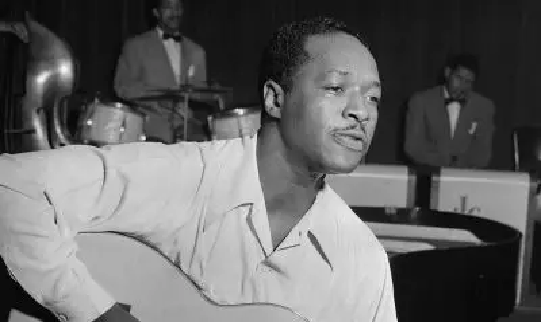
Heritage Transmission Across Two Decades: From Vinyl Records to Archival Preservation
The role of the Archives Keeper
If Josh White’s music is to survive through time, it would have been impossible without institutions like Smithsonian Folkways. They not only reissue his recordings but also incorporate his archive into academic research and educational resources. These efforts ensure that his voice will not be lost in the dust of history.
Recommended reading: Smithsonian Folkways’ official archive of Josh White’s music
Re-evaluation in academia
Historians and musicologists are increasingly recognizing Josh White as a key figure in the American civil rights movement. His songs, such as “One Meat Ball” and “Strange Fruit,” are not merely works of art but expressions of political and social issues. This renewed scholarly research has liberated him from the narrow definition of “entertainment singer” to a more nuanced perspective as a “social witness.”
Musicians’ continued tribute
His influence continues to extend across the music world. Bob Dylan frequently cited the stage presence he learned from Josh White in his early years, while Harry Belafonte even called him “a true pioneer of folk music.” A new generation of musicians, through covers and live tributes, has kept Josh White’s name alive in the public memory.
1998: The birth of the stamp, Josh White’s eternal testimony
Stamp Series Background
In 1998, the U. S. Postal Service launched the “Folk Musicians” stamp series, honoring legendary figures who have contributed to the development of American music culture. Josh White was included among the stamps, alongside Lead Belly, Woody Guthrie, and others.
Recommended reading: U. S. Postal Service 1998 “Folk Musicians” stamp series official press release
The significance of Josh White’s selection
His selection symbolizes official national recognition of his artistic and social contributions. It is not only a tribute to his musical achievements, but also a recognition of his courageous voice in the civil rights movement.
Stamp Design and Art
The stamp, designed by artist Paul Salmon, features Josh White’s portrait as its core element. Details in the design capture his warm yet resolute expression, suggesting he is both a singer on stage and a witness to history. A stamp is more than just a piece of paper; it is a cultural symbol of artistic value.
Release and response
The 1998 stamp launch attracted significant media and public attention. Philatelic circles lauded the design and significance of the stamp, while the general public took the opportunity to rediscover this once-famous musical icon. From “forgotten hero” to “national cultural icon,” Josh White completed a historic comeback.
FAQ: About the Josh White Estate and Stamps
When did Josh White die?
— He died on September 5, 1969, at the age of 55.
Why was the stamp issued only in 1998?
— This was a gradual process of re-evaluation. It took decades for society and academia to fully recognize his status in music and social movements.
What set does this stamp belong to?
— It’s from the U. S. Postal Service’s “Folk Musicians” series.
Who else is in the series?
— Huddie Ledbetter (Lead Belly), Woody Guthrie, and others, all important figures in American music history.
What is the value of a stamp?
— Its primary value lies in its cultural and historical significance, not its monetary value. For stamp collectors, it’s a collectible; for music history, it’s a testament to the enduring legacy of life and death.
6. Conclusion: From death to commemoration, Josh White’s sound remains timeless
From his death in 1969 to the issuance of a USPS stamp in 1998, Josh White’s story proves that true artistic and social contributions endure. Three decades of reflection brought him from obscurity back into the public eye, earning him a permanent national commemoration on a stamp.
This is not only a tribute to a folk singer, but also a recognition of a social activist. Josh White’s voice and spirit have transcended his own life and become an indelible part of America’s cultural heritage.
Recommended resource: Josh White Audio Archive at the Library of Congress
Sources and update note
Use the linked primary record for the exact issue, rule or current condition. Prices, availability and platform features can change and should be checked at the time of use.