
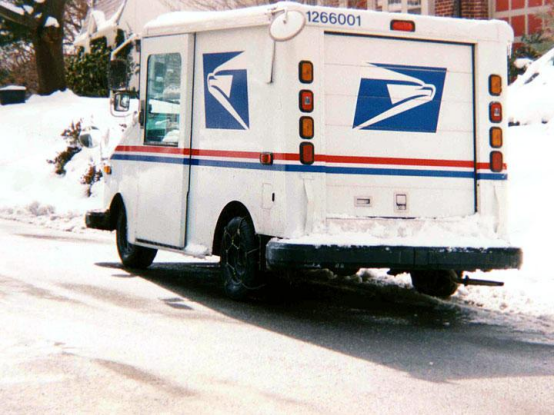
When you think of United States Postal Service (USPS) vehicles, you probably immediately picture the boxy, white vehicle with red and blue stripes—yes, that Grumman LLV. For decades, it’s become a standard issue for postal workers, crisscrossing the streets like an old friend. However, few people know that from the original horse-drawn carriages to the Ford Model T and now to the Next Generation Delivery Vehicles (NGDVs) gradually being unveiled, the evolution of this fleet isn’t just about cosmetic changes; it’s about comprehensive upgrades in technology, efficiency, safety, and environmental awareness.
Verified facts for this topic
USPS awarded the NGDV contract to Oshkosh Defense in 2021. A 2022 plan anticipated 106,000 delivery vehicles through 2028, including at least 66,000 battery-electric vehicles; plan totals are not completed-delivery totals.
Delivering for America began in 2021 as a ten-year transformation plan with $40 billion in planned investment across delivery, processing, retail, IT, sorting and vehicles. Later updates are plan evolution, not proof that every target is complete.
From Hooves to Engines: The Early USPS Fleet
Before the advent of the automobile, mail delivery relied almost entirely on horses and carriages. These were slow, weather-sensitive, and could even get soaked in rainy weather. The advent of the Ford Model T in the early 20th century gave the USPS the opportunity to replace horse-drawn carriages with motorized vehicles. However, these early mail carriages weren’t designed specifically for postal delivery—they lacked convenient storage and durable construction, forcing mail carriers to find ways to load the mail themselves.
It wasn’t until the mid-20th century that the USPS began to procure specialized postal vehicles in large quantities, such as the Jeep DJ-5. Its open cab and rugged body were not only durable but also instantly recognized the postman.
Grumman LLV: A symbol of the postal service’s golden age
In the mid-1980s, the USPS needed a new vehicle that could last for 20 to 30 years as its fleet began to age. Thus, the Grumman Long Life Vehicle came into being.
Its highlight is not just the “long life” in its name:
Aluminum body + durable chassis: designed for frequent starts and stops, capable of handling various road conditions in the United States, from cities to rural areas.
Right-hand drive design: allows the postman to put letters into the roadside mailbox directly through the car window without having to get on and off the car repeatedly on the road.
Spacious storage space: can hold the entire route’s letters and packages at once.
Highly recognizable appearance: For many Americans, seeing an LLV driving by means they know the mail is about to arrive.
However, the car wasn’t without flaws. It lacked air conditioning and airbags and had meager fuel efficiency. With soaring package volumes and heightened safety standards, the LLV era was finally coming to an end.
NGDV: The new postal vehicle of the future
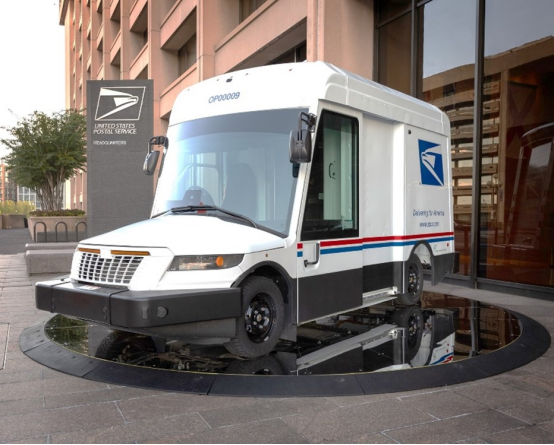
In 2015, the USPS officially launched its Next-Generation Delivery Vehicle program, searching for a successor to the LLV. After a lengthy testing and competition process, Oshkosh Defense was awarded the manufacturing contract in 2021.
The NGDV’s “futuristic feel” isn’t just about its sleeker appearance:
Fuel and pure electric dual versions: meet the operational needs of different regions and pave the way for the electrification of the USPS fleet.
a full range of safety features: airbags, ABS, collision warning, lane departure warning, and a 360-degree camera.
More comfortable driving environment: The air conditioning is more powerful, the field of vision is wider, and the ergonomic design is more in line with the postman’s working habits.
Larger package capacity: In response to the booming e-commerce market, more packages can be packed into one delivery.
From LLV to NGDV: More Than Just a Change of Vehicle
The challenges of this upgrade are not small:
The investment is huge: purchasing tens of thousands of vehicles and building a charging network. The bill is quite considerable.
Technical verification: It will take time to test the electric version’s endurance in extremely cold or hot climates.
Infrastructure construction: Deploying charging stations across the country is a tough challenge for both logistics and power systems.
Public acceptance: The design has sparked controversy, but the USPS has made it clear that practicality and safety are top priorities.
Conclusion: The end of an era, the beginning of a new one
From horse-drawn carriages to LLVs and finally NGDVs, the evolution of the USPS fleet is a condensed history of transportation and a mirror reflecting the changing needs of society and technological trends. LLVs represent the golden age of the USPS at the end of the last century, while NGDVs represent the USPS’s journey toward a greener, safer, and more efficient future.
The next time you see that newfangled, quieter mail truck on the street corner, it could be the new-age mailman delivering your package to your doorstep in a whole new way.
Sources and update note
Use the linked primary record for the exact issue, rule or current condition. Prices, availability and platform features can change and should be checked at the time of use.