
Three dated records behind this stamp
- July 25, 1974: Jordan spoke during the House Judiciary Committee’s debate over articles of impeachment against President Nixon; the House’s edited transcript documents the remarks and context.
- Portrait source: The USPS issue notice identifies Albert Slark’s oil painting, based on an undated black-and-white photograph of Jordan. It names Richard Sheaff as stamp designer; the source does not name the original photographer or date the reference photo.
- September 16, 2011: USPS released the stamp in Houston as Black Heritage No. 34, item 466200, a Forever stamp in a pane of 20. Its first-day ceremony took place at Texas Southern University.
These are separate records: a 1974 congressional event, an undated portrait reference and a 2011 postal issue. Keeping them distinct prevents a speech photograph from being mistaken for the stamp’s art source.
The USPS issue image gives a visual check alongside those records: Jordan’s painted likeness and the “Black Heritage” inscription identify the commemorative design, while the date and portrait source are established by the issue notice, not by a presumed 1974 speech photograph.
Stories Behind the Stamps: Black Heritage Series
The Black Heritage series began with Harriet Tubman in 1978. Jordan’s position as No. 34 belongs to that named sequence.
Jordan was the first Black woman elected to Congress from the South. The House historical biography documents her three House terms and earlier Texas Senate work; the 1974 Judiciary Committee statement is one specific example of the public role for which readers remember her. Describing the stamp as a symbol of democracy is an interpretation, not a substitute for these dated records.
Design details: Slark’s painted portrait
Slark’s painting presents Jordan in a direct, dignified pose; the underlying photograph’s creator and date are not identified in the USPS issue notice.
The words “Barbara Jordan” and “Black Heritage” help identify the issue, while “Forever” gives its postage category. The first-day ceremony took place at Texas Southern University, where Jordan studied. The USPS ceremony release records remarks by executive vice president Ellis Burgoyne about her social-justice work; use that dated account for ceremony context.
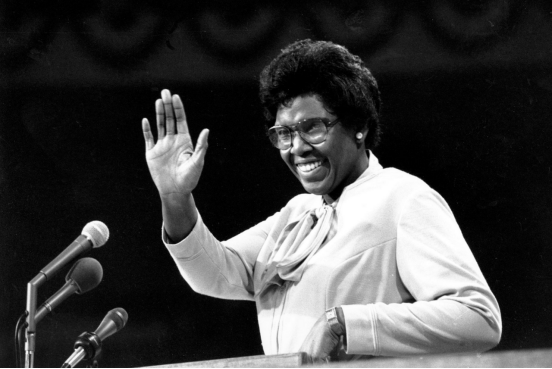
Jordan’s public record behind the commemoration
A postal portrait compresses a public career into a small, repeatable image. The stamp shows Jordan’s painted likeness, but it does not depict a particular floor speech or legislative vote. To understand the career behind that image, the House biography and the 1974 Judiciary Committee record provide more detail than the stamp alone can carry.
Jordan won election to the Texas Senate in 1966 and to the U.S. House in 1972, taking her House seat in January 1973. Beyond the 1974 Judiciary Committee statement, the House biography documents a specific congressional contribution: she introduced language-minority voting protections that were incorporated into the 1975 Voting Rights Act reauthorization. This describes her legislative role without attributing the whole act to one member.
In the Texas Senate, the House biography credits Jordan with work on a minimum wage law, antidiscrimination clauses in business contracts and a fair-employment-practices commission. Those are concrete legislative examples, while her 1974 committee statement shows how she argued about constitutional standards during the Nixon impeachment inquiry. The stamp commemorates the person; those records document the work.
The collection value and symbolic meaning of stamps
For philatelists, the issue has postal, design and historical context. Collector value still depends on the exact format, condition, provenance and comparable completed sales; symbolic importance alone does not establish a premium.
As a Forever issue, a genuine unused example retains the applicable ordinary one-ounce domestic letter value. That postage value is distinct from any collector premium.
Final Words
Barbara Jordan’s record was about more than being “first”: it includes legislative work and a documented constitutional argument during the 1974 impeachment inquiry. The 2011 stamp carries a painted portrait of her into everyday correspondence, while the House record preserves the speech itself.